


Holidays on the island of Formentera - everything you need to know before your trip
Formentera is a quieter island belonging to Balearic Islands. If you want relaxation by the sea, beautiful nature and at the same time you want to avoid the crowds of tourists, go here.

Natural beaches on the island of Formentera
Formentera in a nutshell
- Formentera is not big, its area of 83 km² makes it the eleventh largest island in Spain.
- You will find it in the west of the Mediterranean Sea some 300 km from Barcelona (as the crow flies), it's 11,5 hours by Balearia ferry (more in section How to get to Formentera).
- The official name in Spanish and Catalan is Formentera.
- Together with Mallorca, Menorca a Ibiza belongs to one of the 17 autonomous communities of Spain - Balearic Islands.
- The island has around 11 permanent residents, but in the summer their number increases due to tourism.
- Compared to the other Balearic Islands, Formentera has limited transport links less frequented and quieter. Its northern part forms part of the Ses Salines Natural Park (UNESCO).
- Although children are welcome on Formentera and you can do most of the activities with them (biking, swimming, sightseeing), this is not a typical family island. Water parks, amusement parks and other similar entertainment infrastructure are missing here.
- Formentera is 19 km long and 1 m to 500 km wide. The highest point reaches 6 m, so it can be traveled all the way by bicycle (more in section What to do and see in Formentera).
- The main attraction of Formentera are the wonderful beaches, especially in the north and on the island of Espalmador (more in the section The best beaches on Formentera).
In this article you will find everything important about Formentera:
What to do and see in Formentera - The best beaches - Where to go for a trip in Formentera and beyond - Weather and when is the best time to go to Formentera - How to get to Formentera - How to get around Formentera - Where to stay
What to do and see during your vacation in Formentera? These are the best sights and attractions you can't miss
Barbaria and Far de la Mola lighthouses
Es Cap de Barbaria lighthouse turns off at the southernmost point of the island, which is also the closest point of the Balearic Islands to the coast of Africa. A pleasant, several kilometer long walk leads to it from Sant Francesc, a car can be parked in a nearby parking lot.
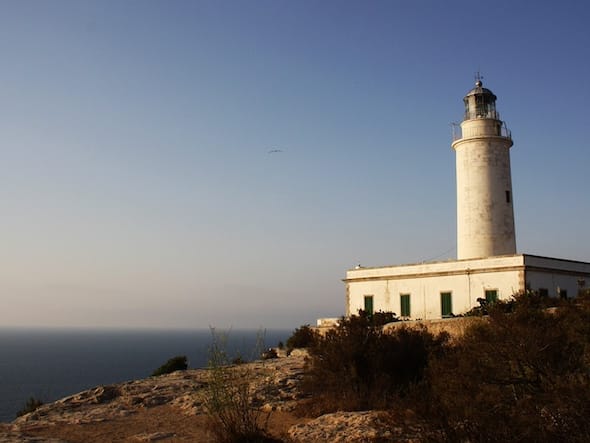
The symbol of the island, the Far de la Mola lighthouse
At the easternmost end of Formentera, near the village of Pilar de la Mola, it has been standing since November 1861 Far de la Mola lighthouse. The white, spherical tower on a roughly hundred-meter cliff is considered one of the symbols of the island. Currently, the lighthouse houses a museum describing its operation and the history of Formentera.
Opening hours and price list >>>
Historical monuments
The island of Formentera will also delight lovers of history and ethnography with its offer of sights:
- Visit the seven windmills Molí Vell and Molí d'en Botigues (La Mola peninsula), Molí d'en Mateu and Molí d'en Jeroni (near Sant Francesc), Molí d'en Teuet and Molí de ses Roques (near Sant Ferran) and Molí d' en Simon (Barbaria Peninsula)
- Explore the watchtowers and fortresses warning the inhabitants of the island against pirates in history (e.g. Sa Guardiola, Punta Prima, Punta Gavina or Des Garroveret)
- Discover a prehistoric stone circle Ca Na Costa northwest of Es Pujols
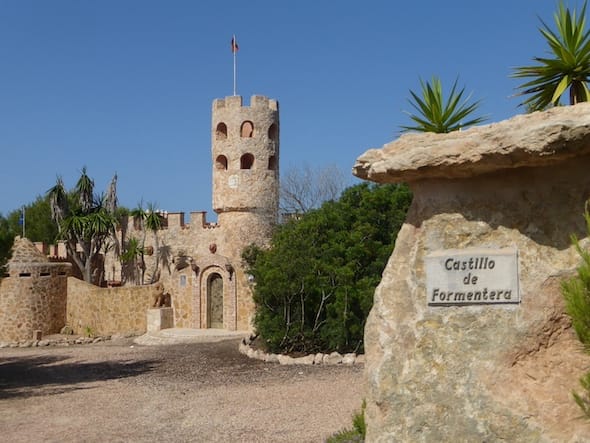
You will find old watchtowers and redoubts in various places on the island
Ses Salines Natural Park
Tens of square kilometers, the large Ses Salines park occupies a substantial part of northern Formentera, the islands of Espalmador and Espardell, the south of Ibiza, several other islets and the sea between them. Thanks to the unique marine ecosystem (sea posidonia meadows) made it to the UNESCO list.
Directly on Formentera, the park partly includes the romantic coast of Sa Pedrera and above all a pair of vast salt lagoons Estany Pudent and Estany des Peix. Swimming is prohibited in them, but you can observe a lot of waterfowl, including flamingos, cycle around them or just walk along them.
The trail around the island is not only for photographers
Much of the coast of Formentera you can walk along the new marked trail (more informations), which offers the most beautiful views of the island and the sea. Special furniture in selected places allows you to fix the camera in the ideal position, so that your photos are really worth it. At the restaurant with parking next to the road to Pilar de Mola in the steepest place stop at the viewpoint "Mirador" and you can see almost the whole island.
Several dozen beautiful walks are documented on the island's official tourist website.
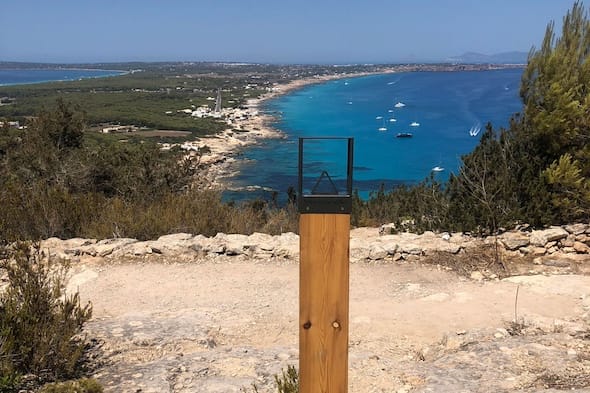
Cami Sa Pujada – the trail that leads to the village of La Mola
Interesting towns and villages in Formentera
Es Pujols – The small but very pleasant resort of Es Pujols is located in the northeast of Formentera between the coast of the Mediterranean Sea and the shores of Estany Pudent lagoon. Here you can enjoy great pizza, gelato and espresso, because the Italian minority lives here and the village is sometimes called "Little Italy". And like in proper Italy, it also lives long into the night here.
Sant Ferran de ses Roques – The slightly inconspicuous Sant Ferran de ses Roques was popular with members of the hippie movement in the 60s and 70s. It is located less than 20 km from the coast and boasts a small but nice historic center. There is quite a rich social life here: a craft and art market (from May to October every day from 3:21 to 24:30 except Wednesdays and Sundays), concerts in the square (from May to October every Friday), a guitar festival (September) and local festivities ( always on May XNUMX).
Saint Francesc Xavier – The largest and main residence of Formentera is called Sant Francesc Xavier and you can find it almost in the heart of the island, a few hundred meters from the Estany Pudent lagoon. The ancient Sa Tanca Vella chapel, the Ajuntament Vell gallery (free entry) and the Església de Sant Francesc Xavier church from the 18th century on Placa de la Constitució are worth seeing here. Note its fortifications, due to pirates in the past. You can learn about the history of the area in the ethnographic museum (except weekends, daily from 9 a.m. to 19 p.m. with a break from 14 p.m. to 17 p.m.). Local holidays take place on July 25 (Sant Jaume), August 5 (Santa María) and December 3 (Sant Francis Xavier).
the Savina – If you get to Formentera, it will almost certainly be through the port of La Savina – it is the only one on the island and there is no airport here. The village is predisposed to the role of a transport hub by its favorable location - between the Estany des Peix and Estany Pudent lagoons, directly opposite Ibiza. This is probably the busiest place on the island, full of restaurants, hotels and pubs. It is from here that the best way to cycle to the nature park around Estana Pudent.
The best beaches on Formentera
The greatest wealth of Formentera is represented by its wonderful beaches, thanks to which the island is sometimes nicknamed the "European Caribbean".
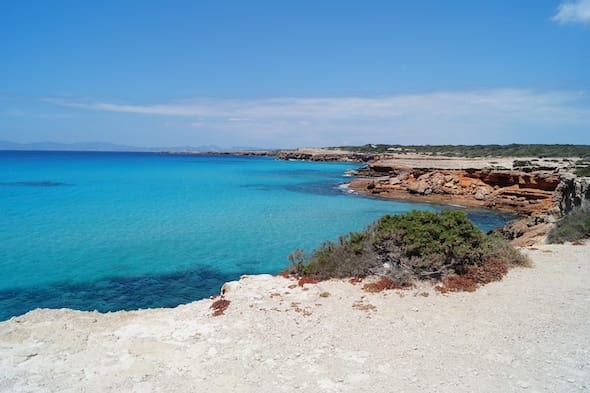
Most of the beaches on the island of Formentera are wild
Saône Cove – The small, all the more impressive beach is surrounded by cliffs on both sides, Punta Rasa in the south and Caló d'en Trull in the north. It stretches for about 100 m in the middle of the west coast of the island near the settlement of the same name. Beautiful sunsets can be seen here, there is lifeguard supervision and a varied offer of water activities. The advantage is that a public transport bus stops right there.
Es Pujols – Near the popular resort of Es Pujols in the northeast, there are several beaches worth your attention. The first, longest and closest of them, bears the name of the resort. It offers service to adjacent hotels, restaurants and shops, and at the same time, thanks to its size, it leaves enough space for every visitor. It is made interesting by the various rocks and islets that emerge from the clear sea in front of it.
Sa Roqueta – In the northwest direction from Es Pujols, behind Ses Canyes beach, another interesting piece of coast awaits you. After all, its stony appearance is hidden in the name of Sa Roqueta beach. This is also the main reason why less people go here, but if you like peace and snorkeling, you will like it a lot.
Ses Illetes – Probably Formentera's most iconic beach can be enjoyed on the western half of the northernmost tip of the island, about 5 km from Es Pujols. Here the spit of land narrows so much that the sea washes the shores from both sides. Deserted islets with dilapidated buildings rise out of the water, the Ibiza skyline looms in the distance, and yachts and boats glide across the surface. There is a road leading to the beach with a parking lot, so it's really lively here. At the same time, there are restaurants and snack kiosks, lifeguards in some sections and sunbeds with umbrellas for a fee.
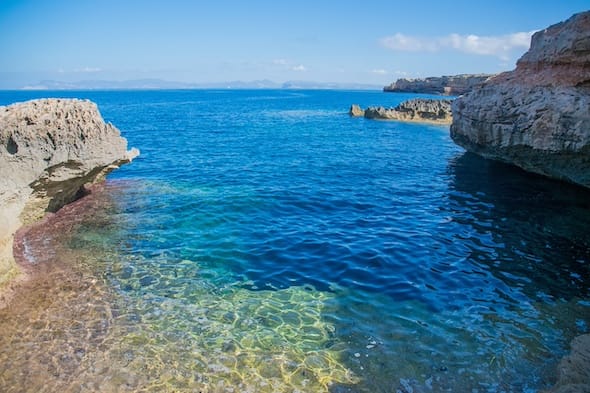
Bathing in the sea between the rocks
carry – On the eastern side of the mainland spit, i.e. on the opposite side from Ses Illetes, one can take advantage of the impressive Llevant beaches. It is a wild beach with zero service, but due to its attractiveness it is also very visited. Many of its sections are popular with naturists.
Espalmador – You can only get to the private island of Espalmador by boat from the port of La Savina – Ibiza is already located north of it. Alga beach in its southern part is about 1 m long, while the shorter Platgeta de Sa Torreta in the north also occupies a bit of the neighboring islet of Sa Torreta. Both are beautiful and uncrowded, but also without any service or shade options.
Migjorn – Also Migjorn Beach can confidently claim the title of "Formentera's most beautiful beach". It is located on the southeast coast of the island and is easily accessible from the main road connecting Sant Ferran de ses Roques and Pilar de la Mola. It is actually a system of smaller beaches, romantic rocky corners and longer, "traditional beach" sections covered with light, fine sand. Access to the beach is often facilitated by wooden walkways and there are plenty of refreshment facilities, especially around the hotel complex at the end of Career Maryland Street.
Cavall d'En Borràs – About 2 km long, i.e. a sufficiently spacious beach northeast of the resort of La Savina is named after the bay that you will enjoy from it. From the main road, there is a turnoff to the parking lot and a footpath along the Beso Beach restaurant leading to the beach.
Ses Platgetes – Ses Platgetes beach (Ses Platetes, Ses Platjetes) are actually three smaller sandy beaches next to each other, separated by stone cliffs. It is connected to the east by the small resort of Es Caló. An ideal place for snorkelers.
Where to go on a trip in Formentera and beyond?
Espalmador Island
The tiny islet of Espalmador between Formentera and Ibiza is interesting because it is a private plot of land. However, its owners, the wealthy Belgian Cigrang brothers, do not mind tourists. You can only get here by boat (ideally from the port of La Savina) and a romantic landscape awaits you with picturesque nature, amazing views, numerous coves and, of course, great beaches (more in The best beaches on Formentera). Popular activities on the island include snorkeling and diving, sunset picnics, walking and anti-rheumatic mud baths.
Weather on the island of Formentera throughout the year - when is the best time to visit?
On Formentera you can thanks to its pleasant Mediterranean climate go at any time of the year.
From June to September temperatures reach over 30 °C, there is little rain and the sea water is pleasant enough for swimming.
From November to March with average temperatures between 15 and 20 °C and occasional rain.
How to get to Formentera?
The only way to get to Formentera is by Balearia ferry:
- ·from mainland Spain (Barcelona–La Savina, approx. 11,5 hours), viz Ferries from Barcelona; you can find the ticket at FerryHopper
- from Ibiza (Eivissa–La Savina, approx. 30 min), see Ferry Ibiza – Formentera for more information
How to get around Formentera?
You can easily and comfortably travel around the interior of Formentera by bus, car, bicycle or scooter.
Rented car – Prices for renting cars, motorbikes and scooters from a local car rental company vary by vehicle type, season and rental period, but are generally good value for money. Before renting, don't forget to check the terms and conditions, insurance and security deposit information.
Buses – The bus network in Formentera includes five lines L1, L2, L3, L5 and L7. They connect all important resorts and beaches, summer line L3 runs to the northern tip of the island. Bus connections are regular, frequent and reliable, and you can buy tickets at a reasonable price.
Bicycle, motorcycle or scooter – The flat landscape of Formentera literally tempts you to go cycling. Mainly tourists are served by the network of cycle paths in the north of Metrominut. You can rent a bicycle in a number of places, including the option of online booking. You can also move around the island well on a motorcycle or a scooter (here several rental companies and works here too cooltra).
Where to stay on holiday in Formentera?
Formentera is not a big island, there are no extensive hotel zones, and therefore it can happen that you won't find accommodation at the last minute. Therefore, book it in time. You can choose from comfortable resorts, smaller hotels, holiday villas as well as guesthouses and apartments in a whole range of price categories.
A few tips for larger and well-known hotel resorts:
- Hotel Cala Saona & Spa – one of the most luxurious hotels on the island by Cala Saona beach
- Hotel Club Sunway Punta Prima – a complex near Es Pujols beach with wonderful views of the sea and Ibiza
- Insotel Club Maryland – a luxury hotel with a large pool right next to Migjorn beach
- Insotel Hotel Formentera Playa – a sprawling hotel with services for the whole family on the south coast

👇 Don't miss this!
- Discount tourist cards—save on city transportation and get free admission to museums and landmarks, plus great discounts at shops and restaurants.
- Buy tickets online—save money, time, and stress by purchasing admission to attractions from the comfort of your home through the Barcelona Tourist Office’s online store; if you’ve never bought tickets online before, read my detailed guide along with my personal experience on how to do it.
- Find Accommodations—plenty of hotels, hostels, and guesthouses at reasonable prices. You can book immediately and pay after your stay.
- Rent a car—if you don’t want to walk or want to venture further out of Barcelona, try Rental Cars. They’ll deliver the car to the airport, and you won’t have to worry about a thing.
🎟️ Tickets
Sagrada Família tickets, Barcelona Aquarium tickets, Park Güell tickets, FC Barcelona tickets, Picasso Museum tickets – view all tickets >>>
💥 Latest Articles
- For lovers of water and the sea: the Barcelona Aquarium, Marineland Mallorca, Marineland Catalunya, or Water World Park in Lloret de Mar
- Pablo Picasso in Barcelona – How Did the Catalan Metropolis Influence the Life of This World-Renowned Artist?
- Three Kings’ Day in Barcelona – What It’s All About and Where to Watch the Parades
- The Church of Santa Maria del Mar, or the Cathedral of the Sea, as a perfect example of Catalan Gothic architecture
- Souvenirs from Barcelona – what to buy for yourself or your loved ones as a memento of your vacation?
- Bike Rentals in Barcelona – Information on Bike Rental Options and Rental Shops
- Cava + winery tour – where to go for it during your stay in Barcelona?
- Barcelona Metro Map – Digital, Downloadable, and Printable
- Castells, human towers, and gegants, giant figures – unusual Catalan traditions
- The Balearic Islands: Mallorca, Ibiza, Menorca, Formentera – popular tourist destinations about 200 km from Barcelona by sea
- Cable cars in Barcelona – what are the main tourist cable cars, and which one should you choose?
- Free walking tours in Barcelona – guided city tours that won’t cost you a thing
- The Cascada Monumental Fountain – a fountain in a city park designed in part by Gaudí
- Best places for brunch in Barcelona + Best bottomless brunch in Barcelona
- Gaudí’s buildings in Barcelona (map)
- What to Do in Barcelona on Christmas Eve and During the Holiday Season?
- Christmas Garden in Barcelona: Els Llums de Sant Pau
- Taxis in Barcelona: Official Fares for 2026 and Mobile Taxi Apps
- The Luxury Shopping District of Passeig de Gràcia in Barcelona – If You Love Shopping, You Can’t Miss This Street
- Gluten-Free Restaurants in Barcelona – Tips on the Best Places You Must Visit
- La Mercè Celebrations – What Are They All About, and What’s on the Program This Year?
- The Banksy Museum in Barcelona – this unconventional museum featuring works by the famous graffiti artist is definitely worth a visit!
- The Salvador Dalí Museum – take a trip to Figueres, where the famous artist has his museum
- Antoni Gaudí and His Buildings in Barcelona – My List of the Top 9 Must-See Structures
- Vacation in Tarragona – what to see and do in this city?
- Long weekend in Barcelona? – My tips for anyone heading to Barcelona for the first time for a long weekend and wanting to make the most of their vacation.
- Montjuïc Castle (Castell de Montjuïc)—a trip to the castle fortress atop Barcelona’s Montjuïc Hill
- La Roca Village – an outlet village offering international fashion near Barcelona
- What to See, Do, and Experience in Barcelona? (video) – a few videos to inspire your visit to Barcelona
- Spanish food—what must you try in Barcelona? It’s not just paella or tapas...
- Flixbus launches a new bus route from Prague to Barcelona
- Christopher Columbus Monument – a monument to the famous explorer with an unusual view.
- Casa Vicens – Gaudí’s first house in Barcelona, which you’ve definitely never seen before.
- Parking at the Vienna Airport—a detailed article on where to park if you’re flying to Barcelona from Vienna.
- Airport Lounges in 2026—my super-long guide to airport lounges: what they are, what services they offer, and how to get in for free
- Why Not to Buy Flights on Kiwi.com – a summary of my experiences explaining why you should avoid buying flights to Barcelona from resellers
- Austrian Highway Toll Sticker (2026) – my experience with the Austrian highway toll sticker and where to buy it
- Ferries from Barcelona: Barcelona–Mallorca Ferry, Barcelona–Ibiza Ferry, Barcelona–Menorca Ferry
- Internet and Unlimited Data in Switzerland

Who writes this website about Barcelona for you?
 Michal Acler writes the Barcelona guide for you (more about the website and its content). He fell in love with this beautiful Catalan city on his very first visit in 2006 and has been returning here regularly every year ever since. Thanks to this, all the information on this website and on Instagram is up-to-date, verified, and based on his own experiences. If you have a question, a tip, need advice, or have found an error on the website, please send him an email.