


Pablo Picasso and his connection with Barcelona: how did the Catalan city influence the life of a world-class artist?
A lot of people don't know this, but Pablo Picasso, one of the most important artists of the 20th century, has deep roots in Barcelona. Pools Catalan the city played a key role in his artistic development and inspiration. Let's take a look at Picasso's life story and his relationship with Barcelona.

Portrait of Pablo Picasso in old age
Picasso's arrival in Barcelona
Pablo Picasso was born in Malaga, Spain in 1881. When the boy was 14 years old, moved with his family in 1895 to Barcelona, because his father got a professorship at the local university Real Academia, high school of art in the quarter La Ribera (El Born). (By the way, the school was in the premises of a historical building The Llotja and you can still look at her while wandering around the city.)
Barcelona as a city fascinated the young Picasso and he spent the most important, formative years of his artistic life here.
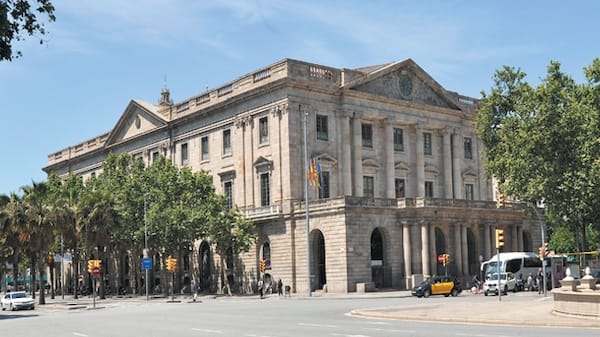
La Llotja building where Picasso studied in Barcelona
Barcelona as the cradle of Picasso's art
Barcelona at the end of the 19th century was a center of artistic revolution, revival and progress. modernism was at the top and Gaudí he was just wondering how long it would take to finish Sagrada Familia.
The young Picasso, who already had a talent and a feeling for drawing from an early age, began soon after moving to study at the same school as his father taught. He was accepted there due to his talent, even though he was only 14 years old.

The Life (La Vie, 1903)
During the school years here met many avant-garde artists and intellectuals, who influenced his life and future career.
The most common place for them to meet was a cafe The four cats, where Picasso had his first public exhibition in 1900.
The blue season full of darkness and doom
And it was Barcelona where Picasso in the years 1901-1904 developed his famous and later highly regarded Blue Period.
This part of his artistic career was affected by various hardships and personal tragedies, such as the suicide of his friend, the painter and poet Carles Casagems.
Picasso's Blue Period characterized by depressing and dramatic images in blue and teal colors, depicting themes of loneliness, poverty, suffering or old age. A frequent motif of his works from this period were people on the fringes of society, such as beggars or prostitutes. Picasso—like all good artists—often he drew on his own experiences, because even when his friend was alive, they liked to wander the dark streets of the neighborhood together El Raval and frequented local brothels.

The Old Guitarist (1903)
Notable works from the Blue Period:
- The Blue Room (1901)
- The Screaming Beggar Woman (1902)
- The Life (La Vie, 1903)
- The Old Guitarist (1903)
Picasso's legacy in Barcelona
Picasso left Barcelona at the age of 23, in 1904.
He went to Paris, where he had already traveled several times in the past.
And even though he left the Catalan capital, his connection with Barcelona never ended, as he returned here regularly.
Today, we can find his traces in several places in the city:
- Picasso Museum (Picasso Museum) – one of the most visited in Barcelona museums na Carrer Montcada, which has a collection of several thousand works by Picasso
- Fresco on the facade of the Col·legi d'Arquitectes – just a few steps away Cathedrals you will find a series of two frescoes by Picasso
- The four cats – the already mentioned historic cafe in the center of Barcelona still carries with it the spirit of the original time when Picasso visited it
- Homage and Picasso – a tribute to Picasso created by another Barcelona artist, Antoni Tàpies in 1983. It is a glass cube filled with furniture set in the middle of a small pond. Personally, I don't really understand this "art"... You can make up your own mind on Passeig de Picasso (map) on the way to city park.

Fresco in front of the Cathedral
Influence on Barcelona culture
Pablo Picasso and Barcelona are inextricably linked.
The city and its people once inspired a young artist, and in return he left an indelible mark here, helping to make Barcelona one of the most important centers of modern art in Europe.
If you are in Barcelona, I definitely recommend visiting its museum - if you like art, you will spend a few hours here. And if you happen to be in town on any 1st Sunday of the month, you can check it out for free...


👇 Don't miss this!
- Discount tourist cards—save on city transportation and get free admission to museums and landmarks, plus great discounts at shops and restaurants.
- Buy tickets online—save money, time, and stress by purchasing admission to attractions from the comfort of your home through the Barcelona Tourist Office’s online store; if you’ve never bought tickets online before, read my detailed guide along with my personal experience on how to do it.
- Find Accommodations—plenty of hotels, hostels, and guesthouses at reasonable prices. You can book immediately and pay after your stay.
- Rent a car—if you don’t want to walk or want to venture further out of Barcelona, try Rental Cars. They’ll deliver the car to the airport, and you won’t have to worry about a thing.
🎟️ Tickets
Sagrada Família tickets, Barcelona Aquarium tickets, Park Güell tickets, FC Barcelona tickets, Picasso Museum tickets – view all tickets >>>
💥 Latest Articles
- For lovers of water and the sea: the Barcelona Aquarium, Marineland Mallorca, Marineland Catalunya, or Water World Park in Lloret de Mar
- Pablo Picasso in Barcelona – How Did the Catalan Metropolis Influence the Life of This World-Renowned Artist?
- Three Kings’ Day in Barcelona – What It’s All About and Where to Watch the Parades
- The Church of Santa Maria del Mar, or the Cathedral of the Sea, as a perfect example of Catalan Gothic architecture
- Souvenirs from Barcelona – what to buy for yourself or your loved ones as a memento of your vacation?
- Bike Rentals in Barcelona – Information on Bike Rental Options and Rental Shops
- Cava + winery tour – where to go for it during your stay in Barcelona?
- Barcelona Metro Map – Digital, Downloadable, and Printable
- Castells, human towers, and gegants, giant figures – unusual Catalan traditions
- The Balearic Islands: Mallorca, Ibiza, Menorca, Formentera – popular tourist destinations about 200 km from Barcelona by sea
- Cable cars in Barcelona – what are the main tourist cable cars, and which one should you choose?
- Free walking tours in Barcelona – guided city tours that won’t cost you a thing
- The Cascada Monumental Fountain – a fountain in a city park designed in part by Gaudí
- Best places for brunch in Barcelona + Best bottomless brunch in Barcelona
- Gaudí’s buildings in Barcelona (map)
- What to Do in Barcelona on Christmas Eve and During the Holiday Season?
- Christmas Garden in Barcelona: Els Llums de Sant Pau
- Taxis in Barcelona: Official Fares for 2026 and Mobile Taxi Apps
- The Luxury Shopping District of Passeig de Gràcia in Barcelona – If You Love Shopping, You Can’t Miss This Street
- Gluten-Free Restaurants in Barcelona – Tips on the Best Places You Must Visit
- La Mercè Celebrations – What Are They All About, and What’s on the Program This Year?
- The Banksy Museum in Barcelona – this unconventional museum featuring works by the famous graffiti artist is definitely worth a visit!
- The Salvador Dalí Museum – take a trip to Figueres, where the famous artist has his museum
- Antoni Gaudí and His Buildings in Barcelona – My List of the Top 9 Must-See Structures
- Vacation in Tarragona – what to see and do in this city?
- Long weekend in Barcelona? – My tips for anyone heading to Barcelona for the first time for a long weekend and wanting to make the most of their vacation.
- Montjuïc Castle (Castell de Montjuïc)—a trip to the castle fortress atop Barcelona’s Montjuïc Hill
- La Roca Village – an outlet village offering international fashion near Barcelona
- What to See, Do, and Experience in Barcelona? (video) – a few videos to inspire your visit to Barcelona
- Spanish food—what must you try in Barcelona? It’s not just paella or tapas...
- Flixbus launches a new bus route from Prague to Barcelona
- Christopher Columbus Monument – a monument to the famous explorer with an unusual view.
- Casa Vicens – Gaudí’s first house in Barcelona, which you’ve definitely never seen before.
- Parking at the Vienna Airport—a detailed article on where to park if you’re flying to Barcelona from Vienna.
- Airport Lounges in 2026—my super-long guide to airport lounges: what they are, what services they offer, and how to get in for free
- Why Not to Buy Flights on Kiwi.com – a summary of my experiences explaining why you should avoid buying flights to Barcelona from resellers
- Austrian Highway Toll Sticker (2026) – my experience with the Austrian highway toll sticker and where to buy it
- Ferries from Barcelona: Barcelona–Mallorca Ferry, Barcelona–Ibiza Ferry, Barcelona–Menorca Ferry
- Internet and Unlimited Data in Switzerland

Who writes this website about Barcelona for you?
 Michal Acler writes the Barcelona guide for you (more about the website and its content). He fell in love with this beautiful Catalan city on his very first visit in 2006 and has been returning here regularly every year ever since. Thanks to this, all the information on this website and on Instagram is up-to-date, verified, and based on his own experiences. If you have a question, a tip, need advice, or have found an error on the website, please send him an email.