


What is Catalan Modernism and where did it come from?
If the shape of today's Barcelona influenced some architectural style, so it is definitely Catalan modernism. Its main representative was none other than Antoni Gaudí.

The beautiful ceiling of the Palau de la Música Catalana concert hall
As the name suggests, this is a unique style originating from Spain's Catalonia and Barcelona is considered its world cradle.
How did Catalan modernism actually come about?
- Catalan modernism is the Spanish answer to the powerful secession movement in Europe and America between 1890–1910.
- The year 1888 is considered the beginning of modernism in Catalonia, when the first World Exhibition took place in Barcelona and on that occasion several representative buildings such as Triumphal arch (Arc de Triomf) or Castle of the Three Dragons v City park (today it serves as one of the buildings of the Museum of Natural Sciences).
- The driving force behind this style was the Catalan bourgeoisie: wealthy businessmen and industrialists (often from the textile industry) who followed European trends and wanted to show others their wealth and status through lavishly decorated and often extravagant buildings
- Although modernism originated in Barcelona, it spread very quickly to other parts of Spain such as Valencia or Cantabria.
Get a discount on the best modernist monuments
If you would like to see the best modernist gems in Barcelona for yourself, get a special discount card Barcelona Card Modernist, which includes entrances to 10 architecturally amazing monuments.
Buy or view more information >>>
What is modernism and what are its characteristics?
It is an artistic and architectural style, which has its foundation precisely in Art Nouveau and adds to it the influences of many other styles and styles: Renaissance, Gothic, Baroque or perhaps Oriental and Moorish architecture. Although all of this may sound incongruous at first listen, the Catalan architects and artists managed to ingeniously combine everything into a unique, interesting, novel and, above all, functional form.
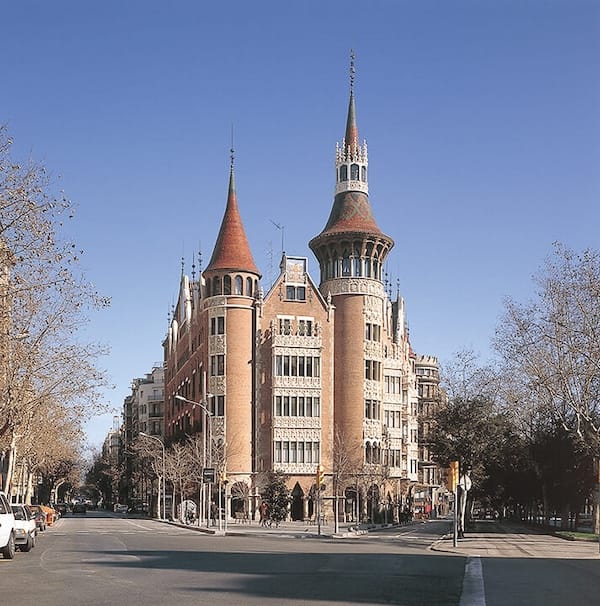
Modernist Casa de les Punxes (Casa Terrades) it looks like a fairytale castle in the middle of the city
In art and architecture, Catalan modernism is most often manifested in the following things:
-
strong inspiration from nature – this is most noticeable on Gaudí's buildings: irregular shapes, motifs and shapes reminiscent of fauna and flora, the use of arches and curves...
-
use of colors – precisely because one of the main inspirations was nature, you can recognize modernist works in abundance by their color: it is lively and colorful just like the world around us. You can most often perceive colors through brightly colored stained glass windows (Sagrada Família) or perhaps mosaics (Park Guell), which are part of many modernist buildings.
-
thoughtful details - you can recognize a true modernist building by the ingenuity with which attention is paid to every detail: they often have rich decoration and various ornaments, which are most often iron, glass or perhaps ceramic. Moreover, during construction, the architect often focused not only on the exterior, but also on the interior: you can see this, for example, in Casa Batlló, where Gaudí was responsible, for example, for the selection of decorated doors and their panelling.
-
respect for craftsmanship – unlike other styles and styles, modernist architects had great respect and admiration for craftsmen and artists. They then often called for help, and thanks to them, many buildings have all the various details, such as sculptures, mosaics or ornaments. Thanks to close cooperation, the results of their work are an integral part of the plan of individual buildings and structures, and everything works perfectly as a whole.
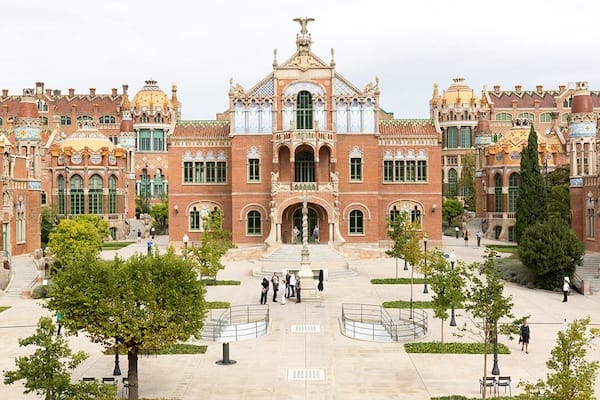
Sant Pau complex: What used to be a hospital until recently is now a modernist complex registered on the UNESCO list
Modernism in Barcelona
Buildings created during Catalan Modernism are most often found in quarter Eixample. It is precisely its construction and development that traces the rise of modernism as a unique architectural style.
To get a good idea of it, I recommend viewing the exteriors and interiors of these buildings: Sagrada Família, Casa Batlló, La Pedrera (Casa Milà), Park Güell, Casa de les Punxes, Casa amatller, Sant Pau modernist complex, Palau de la Música Catalana, Casa Lleó Morera, Casa Comalat, Monumental Cascade v city park
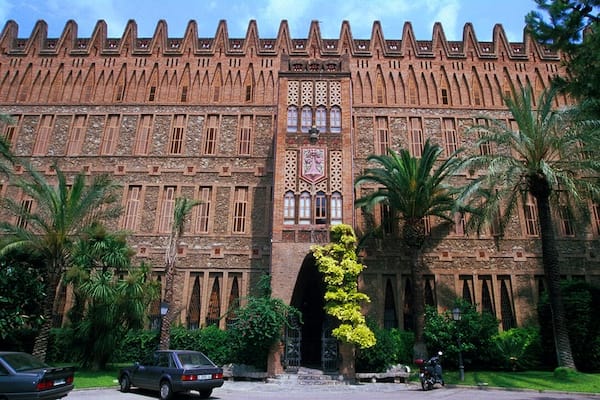
The Teresian College (Col·legi de les Teresianes) in Barcelona by Gaudí
Map: the most beautiful modernist buildings in Barcelona
In the previous paragraph, I gave you some tips on modernist places that you can see in the city. However, this is only a small fraction of what Barcelona has to offer - there are hundreds of them in total! But it's not all just classic heritage buildings and mansions: there are restaurants, cafes, hotels, or otherwise completely ordinary places that are somehow influenced by Catalan modernism.
If you are interested in this topic, I recommend exploring the so-called Barcelona Modernisme Route, which is a walk presenting the best places and objects precisely in the style of Catalan modernism.
If you buy a printed guide, you can go on a journey through the city and follow the red signs to guide you along the way.

You will know that you are on the right Barcelona Route Modernisme thanks to the red markings in the pavement
Get a discount on the best modernist monuments
Buy or view more information >>>
Representatives of Catalan modernism
Architecture
Antoni Gaudí, Lluís Domènech Montaner, Josep Puig i Cadafalch, Josep Maria Jujol, Josep Fontserè Mestre, Juli Batllevell, Francesc Berenguer, Joan Rubio Bellver, Josep Vilaseca, Antoni Rovira and Trias, Salvador Valeri Pupurull, Pere Falqués Urpi, Carles Buïgas
Painting
Ramon Casas, Santiago Rusiñol, Francesc Masriera, Joaquim Mir i Trinxet, Alexandre de Riquer, Oleguer Junyent, Miquel Utrillo, Isidre Nonell, Lluís Masriera
Sculptors and artists
Josep Llimona, Eusebi Arnau, Pau Gargallo, Lluís Brú, Gaspar Homar, Apel·les Mestres
Music composers
Isaac Albeniz, Enric Granados, Lluís Millet, Jaume Pahissa

👇 Don't miss this!
- Discount tourist cards—save on city transportation and get free admission to museums and landmarks, plus great discounts at shops and restaurants.
- Buy tickets online—save money, time, and stress by purchasing admission to attractions from the comfort of your home through the Barcelona Tourist Office’s online store; if you’ve never bought tickets online before, read my detailed guide along with my personal experience on how to do it.
- Find Accommodations—plenty of hotels, hostels, and guesthouses at reasonable prices. You can book immediately and pay after your stay.
- Rent a car—if you don’t want to walk or want to venture further out of Barcelona, try Rental Cars. They’ll deliver the car to the airport, and you won’t have to worry about a thing.
🎟️ Tickets
Sagrada Família tickets, Barcelona Aquarium tickets, Park Güell tickets, FC Barcelona tickets, Picasso Museum tickets – view all tickets >>>
💥 Latest Articles
- For lovers of water and the sea: the Barcelona Aquarium, Marineland Mallorca, Marineland Catalunya, or Water World Park in Lloret de Mar
- Pablo Picasso in Barcelona – How Did the Catalan Metropolis Influence the Life of This World-Renowned Artist?
- Three Kings’ Day in Barcelona – What It’s All About and Where to Watch the Parades
- The Church of Santa Maria del Mar, or the Cathedral of the Sea, as a perfect example of Catalan Gothic architecture
- Souvenirs from Barcelona – what to buy for yourself or your loved ones as a memento of your vacation?
- Bike Rentals in Barcelona – Information on Bike Rental Options and Rental Shops
- Cava + winery tour – where to go for it during your stay in Barcelona?
- Barcelona Metro Map – Digital, Downloadable, and Printable
- Castells, human towers, and gegants, giant figures – unusual Catalan traditions
- The Balearic Islands: Mallorca, Ibiza, Menorca, Formentera – popular tourist destinations about 200 km from Barcelona by sea
- Cable cars in Barcelona – what are the main tourist cable cars, and which one should you choose?
- Free walking tours in Barcelona – guided city tours that won’t cost you a thing
- The Cascada Monumental Fountain – a fountain in a city park designed in part by Gaudí
- Best places for brunch in Barcelona + Best bottomless brunch in Barcelona
- Gaudí’s buildings in Barcelona (map)
- What to Do in Barcelona on Christmas Eve and During the Holiday Season?
- Christmas Garden in Barcelona: Els Llums de Sant Pau
- Taxis in Barcelona: Official Fares for 2026 and Mobile Taxi Apps
- The Luxury Shopping District of Passeig de Gràcia in Barcelona – If You Love Shopping, You Can’t Miss This Street
- Gluten-Free Restaurants in Barcelona – Tips on the Best Places You Must Visit
- La Mercè Celebrations – What Are They All About, and What’s on the Program This Year?
- The Banksy Museum in Barcelona – this unconventional museum featuring works by the famous graffiti artist is definitely worth a visit!
- The Salvador Dalí Museum – take a trip to Figueres, where the famous artist has his museum
- Antoni Gaudí and His Buildings in Barcelona – My List of the Top 9 Must-See Structures
- Vacation in Tarragona – what to see and do in this city?
- Long weekend in Barcelona? – My tips for anyone heading to Barcelona for the first time for a long weekend and wanting to make the most of their vacation.
- Montjuïc Castle (Castell de Montjuïc)—a trip to the castle fortress atop Barcelona’s Montjuïc Hill
- La Roca Village – an outlet village offering international fashion near Barcelona
- What to See, Do, and Experience in Barcelona? (video) – a few videos to inspire your visit to Barcelona
- Spanish food—what must you try in Barcelona? It’s not just paella or tapas...
- Flixbus launches a new bus route from Prague to Barcelona
- Christopher Columbus Monument – a monument to the famous explorer with an unusual view.
- Casa Vicens – Gaudí’s first house in Barcelona, which you’ve definitely never seen before.
- Parking at the Vienna Airport—a detailed article on where to park if you’re flying to Barcelona from Vienna.
- Airport Lounges in 2026—my super-long guide to airport lounges: what they are, what services they offer, and how to get in for free
- Why Not to Buy Flights on Kiwi.com – a summary of my experiences explaining why you should avoid buying flights to Barcelona from resellers
- Austrian Highway Toll Sticker (2026) – my experience with the Austrian highway toll sticker and where to buy it
- Ferries from Barcelona: Barcelona–Mallorca Ferry, Barcelona–Ibiza Ferry, Barcelona–Menorca Ferry
- Internet and Unlimited Data in Switzerland

Who writes this website about Barcelona for you?
 Michal Acler writes the Barcelona guide for you (more about the website and its content). He fell in love with this beautiful Catalan city on his very first visit in 2006 and has been returning here regularly every year ever since. Thanks to this, all the information on this website and on Instagram is up-to-date, verified, and based on his own experiences. If you have a question, a tip, need advice, or have found an error on the website, please send him an email.